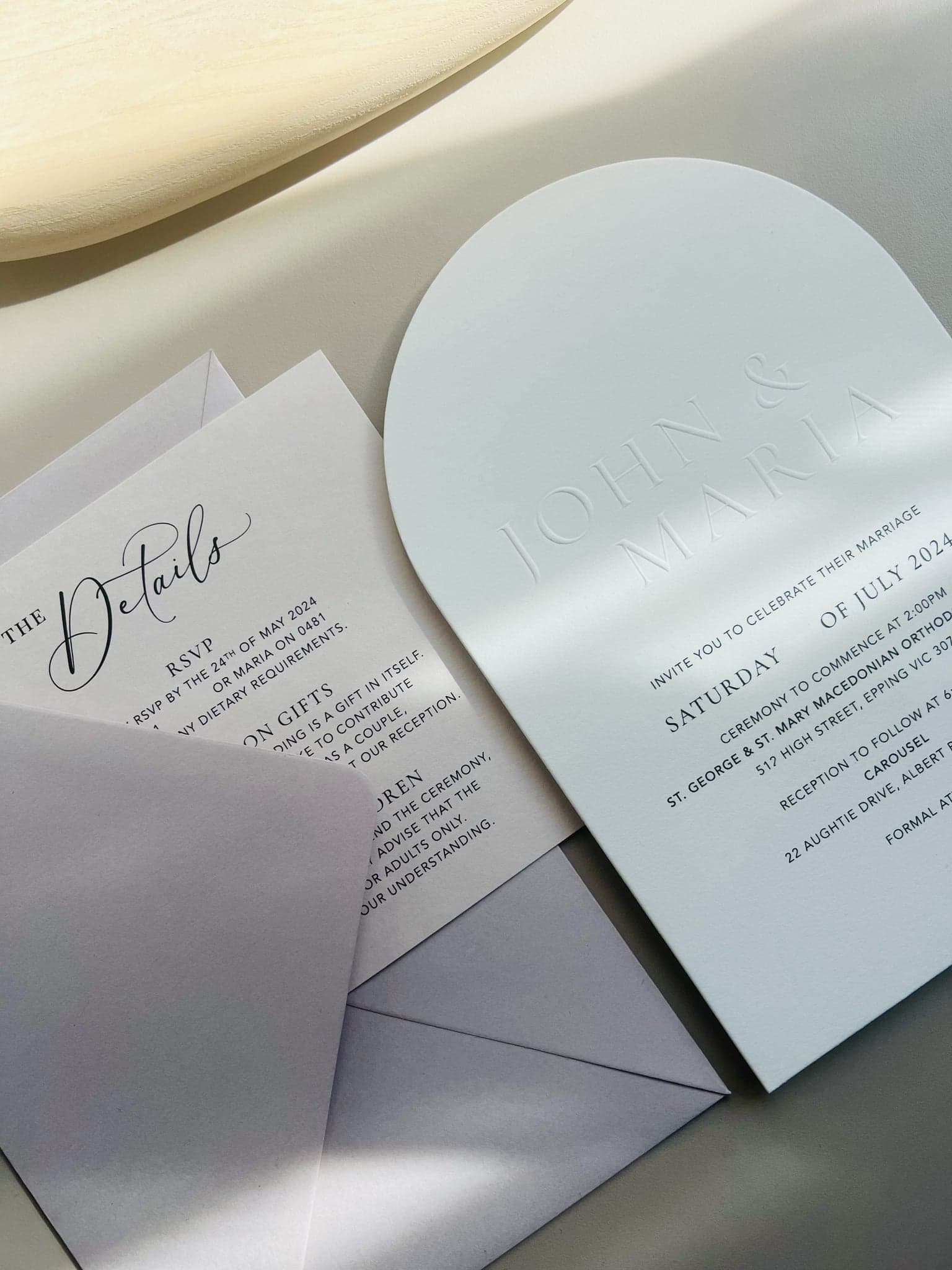
Walk into any premium stationery boutique in Melbourne or Sydney, and you'll quickly realise something: choosing paper for your wedding invitations is far more complex than you ever imagined. The weight, the texture, the finish, the colour—every detail affects how your invitations look and feel. And here's the thing about paper: it's the foundation of everything else. The most beautiful calligraphy or stunning design can't overcome the wrong paper choice, but the perfect paper elevates even simple designs to something extraordinary.
Your guests might not consciously think about paper quality when they receive your invitation, but they'll definitely feel it. That weight in their hands, the way the envelope opens, the texture under their fingertips—these sensory details create an immediate impression about your celebration. Premium paper whispers luxury before a single word is read. That's why understanding your paper options is genuinely worth your time.
Understanding Paper Weight
Let's talk about GSM, which stands for grams per square metre. In Australia, this measurement tells you how thick and substantial your paper feels. Think of it this way: the printer paper in your home office probably sits around eighty GSM—thin, practical, forgettable. Your wedding invitations deserve so much more.
Most couples gravitate toward paper in the 250 to 300 GSM range, and there's good reason for this. This weight hits that sweet spot where invitations feel substantial and luxurious without crossing into territory that requires extra postage or hand-cancelling at Australia Post. When you hold a 300 GSM invitation, it has real presence. It doesn't flop around in your hand or feel flimsy. It announces itself as something special.
That said, some couples push beyond 300 GSM into truly heavyweight territory. These thick, premium papers create an undeniable wow factor. Your guests will comment on how substantial your invitations feel, how clearly they communicate that your celebration will be something extraordinary. Just know that Australia Post will charge more for postage, and you'll need to hand-cancel these invitations rather than running them through postal machines. For luxury weddings at grand venues like Crown Melbourne or the InterContinental in Sydney, this investment makes perfect sense. The paper quality matches the calibre of the celebration.
At the lighter end of the spectrum, papers around 160 to 200 GSM work fine for casual celebrations or when budget is the primary concern. They're adequate but won't create that premium feel that most couples desire for their wedding invitations. Save lightweight papers for information inserts or day-of programmes rather than your main invitation card.
The Magic of Cotton Paper
Here's where stationery enthusiasts get genuinely excited: cotton paper. When you feel cotton paper for the first time, you understand immediately why it's considered the gold standard. The texture is softer, almost fabric-like, with a natural warmth that wood-pulp papers simply can't match. It's the same reason cotton sheets feel more luxurious than polyester—there's something inherently special about natural fibres.
One hundred per cent cotton papers represent the pinnacle of wedding invitation quality. They're what you'll find at the most prestigious stationery houses in Sydney's Paddington or Melbourne's South Yarra. These papers absorb ink beautifully, making them ideal for letterpress printing where you want that gorgeous debossed impression. They age gracefully too, which matters when you're creating keepsakes that couples might treasure for decades.
The challenge with pure cotton papers is cost. They're significantly more expensive than standard papers, which is why many couples opt for cotton-blend papers that contain twenty-five to fifty per cent cotton content. These blends still feel noticeably premium while being kinder to your budget. For most weddings, a good cotton blend delivers that luxury feel without the luxury price tag.
Linen Papers for Classic Elegance
Linen paper offers something different—a subtle woven texture that adds visual interest without being overtly textured. Run your fingers across linen paper and you'll feel that distinctive crosshatch pattern. It's professional and polished, working beautifully for traditional weddings that want classic elegance without going ultra-formal.
What makes linen paper particularly appealing is its versatility. It accepts most printing methods well, comes in a wide range of colours, and costs less than cotton while still feeling substantially better than basic cardstock. For couples planning weddings at historic properties like Rippon Lea Estate in Melbourne or Vaucluse House in Sydney, linen paper complements that classical aesthetic perfectly.
Smooth Papers for Modern Celebrations
If your wedding aesthetic leans contemporary, smooth paper might be calling your name. Ultra-smooth surfaces create the perfect canvas for detailed graphics, modern typography, and crisp, clean designs. Colours print more vibrantly on smooth papers, and fine details stay sharp without the interference of texture.
Modern venues with sleek architecture—think Luminare in Melbourne or The Calyx at Sydney's Royal Botanic Garden—pair beautifully with smooth paper invitations. The paper choice reinforces your contemporary aesthetic from the moment guests open the envelope. Smooth papers also work wonderfully when you want to incorporate photography into your invitation design, as texture can sometimes compete with photographic images.
Specialty Papers Worth Considering
Beyond the main categories, specialty papers add unique character. Felt papers have that gorgeous handmade quality with deep texture that works brilliantly for bohemian or garden weddings. Bamboo papers appeal to eco-conscious couples, offering sustainability without sacrificing beauty. Recycled papers have come remarkably far in quality—modern recycled options can rival traditional papers while reducing environmental impact.
The Finish Makes a Difference
Paper finish might seem like a minor detail, but it affects both appearance and practicality. Matte finish remains the most popular choice for wedding invitations, and for good reason. It's sophisticated and timeless, hides fingerprints beautifully, and creates an understated elegance that never goes out of style. Plus, matte paper accepts calligraphy ink well, which matters if you're addressing envelopes by hand.
Eggshell or satin finishes offer a subtle sheen that adds just a touch of glamour without being overtly shiny. They work particularly well for semi-formal weddings, creating a refined look that sits nicely between casual and ultra-formal. This middle-ground option appeals to many couples who want something special without going to extremes.
Glossy finishes are less common for traditional wedding invitations, though they can work beautifully for modern celebrations or when you want photography to really pop. Just know that glossy papers show fingerprints easily and can be trickier for hand addressing.
Colour Considerations
While white and ivory dominate the wedding invitation landscape, your options extend far beyond these classics. Pure white offers maximum contrast and works with any colour scheme. It's crisp, modern, and readily available. Soft white or natural white has slightly warmer tones that many couples find more inviting. This is probably the most universally flattering option, working beautifully with both gold and silver accents.
Ivory and cream tones bring vintage charm and soften the overall feel of your invitations. Ecru delivers warm, traditional appeal perfect for heritage venues. True ivory sits between white and cream, offering that timeless wedding aesthetic. Antique or vintage cream gives an aged appearance that works wonderfully for rustic or vintage-themed celebrations.
Coloured papers can be stunning but require careful consideration. Light blush, sage green, or dusty blue add subtle personality without overwhelming your design. Darker colours create dramatic impact but need metallic inks to ensure readability. Always order samples and do test prints before committing to coloured papers—what looks gorgeous as a sheet might not work as well with your chosen printing method and ink colours.
Matching Paper to Printing Method
Your printing method significantly influences which papers work best. Letterpress printing, that gorgeous technique that creates debossed impressions, needs soft, thick papers that compress well. Cotton papers around 300 to 400 GSM are ideal—they're thick enough to show the impression beautifully without tearing or buckling. Avoid glossy or coated papers for letterpress; they simply don't work with this traditional technique.
Foil stamping requires smooth or lightly textured surfaces for the foil to adhere properly. Both cotton and linen papers work well, as do most premium smooth stocks. The paper needs to conduct heat evenly, and the surface should be non-porous. Test prints are essential with foil stamping to ensure crisp edges and complete adhesion.
Digital printing offers the most flexibility with paper options. Most papers work fine, though smooth surfaces generally produce the sharpest results. You can use lighter weights successfully with digital printing, which helps if budget is a major concern. Just avoid extremely textured papers that might not run smoothly through digital presses.
Sustainability Matters
More Australian couples are prioritising environmental impact in their wedding planning, and paper choices offer meaningful opportunities for sustainable decisions. FSC-certified papers come from responsibly managed forests, ensuring your beautiful invitations don't contribute to deforestation. Most premium paper suppliers now offer FSC-certified options without compromising on quality or appearance.
Recycled papers have improved dramatically in recent years. Today's high-quality recycled papers rival traditional papers in feel and performance. Some even incorporate post-consumer waste while maintaining that premium wedding invitation quality. Tree-free alternatives like bamboo or hemp papers appeal to couples seeking truly sustainable options. These papers have unique textures and environmental credentials that resonate with eco-conscious celebrations.
Budget Reality Check
Let's talk money. Paper quality significantly impacts your overall stationery budget, so understanding costs helps you make informed decisions. In Australia, budget-friendly papers around 200 GSM typically cost between one and two dollars per invitation. Mid-range cotton-blend papers at 250 to 300 GSM run two to four dollars per piece. Premium pure cotton papers can reach six to ten dollars or more per invitation, not including printing costs.
Standard sizes like A5 or DL cost less than custom sizes that require special cutting. Readily available papers are more affordable than specialty imports. Ordering slightly more than you need prevents expensive small reprints later. Most stationers recommend ordering ten to fifteen per cent extra to cover addressing mistakes and last-minute additions.
Testing Before Committing
Never, ever order your full print run without seeing and feeling actual samples. Photos don't show texture. Online descriptions can't convey weight. You need to hold papers in your hands, compare options side by side, and imagine your wedding invitation printed on each one. Most reputable stationers are happy to provide sample packs—this small investment prevents costly mistakes and buyer's remorse.
Request samples of your top three or four choices. Feel them. Hold them up to light. Test how they fold if your design includes folded elements. Check how easily you can write on them with your planned addressing method. Bring them to your venue if possible and see how they look in that lighting. This hands-on evaluation is invaluable.
Trusting Your Stationer's Expertise
Your stationer has handled hundreds of papers and knows which work best with different printing methods and designs. They've seen which papers show fingerprints, which accept ink beautifully, and which stand up well to Australia Post handling. Trust their recommendations while still following your instincts about what feels right for your celebration.
The perfect paper for your wedding invitations balances beauty, practicality, budget, and printing requirements. It should feel special in your hands while working seamlessly with your chosen design and printing technique. Whether you opt for luxurious cotton, classic linen, or modern smooth paper, what matters most is that your choice feels authentically you—creating invitations that guests will admire and you'll treasure forever.
Ready to feel the difference between paper types? We'd love to send you samples and help you discover the perfect paper for your Australian wedding invitations.