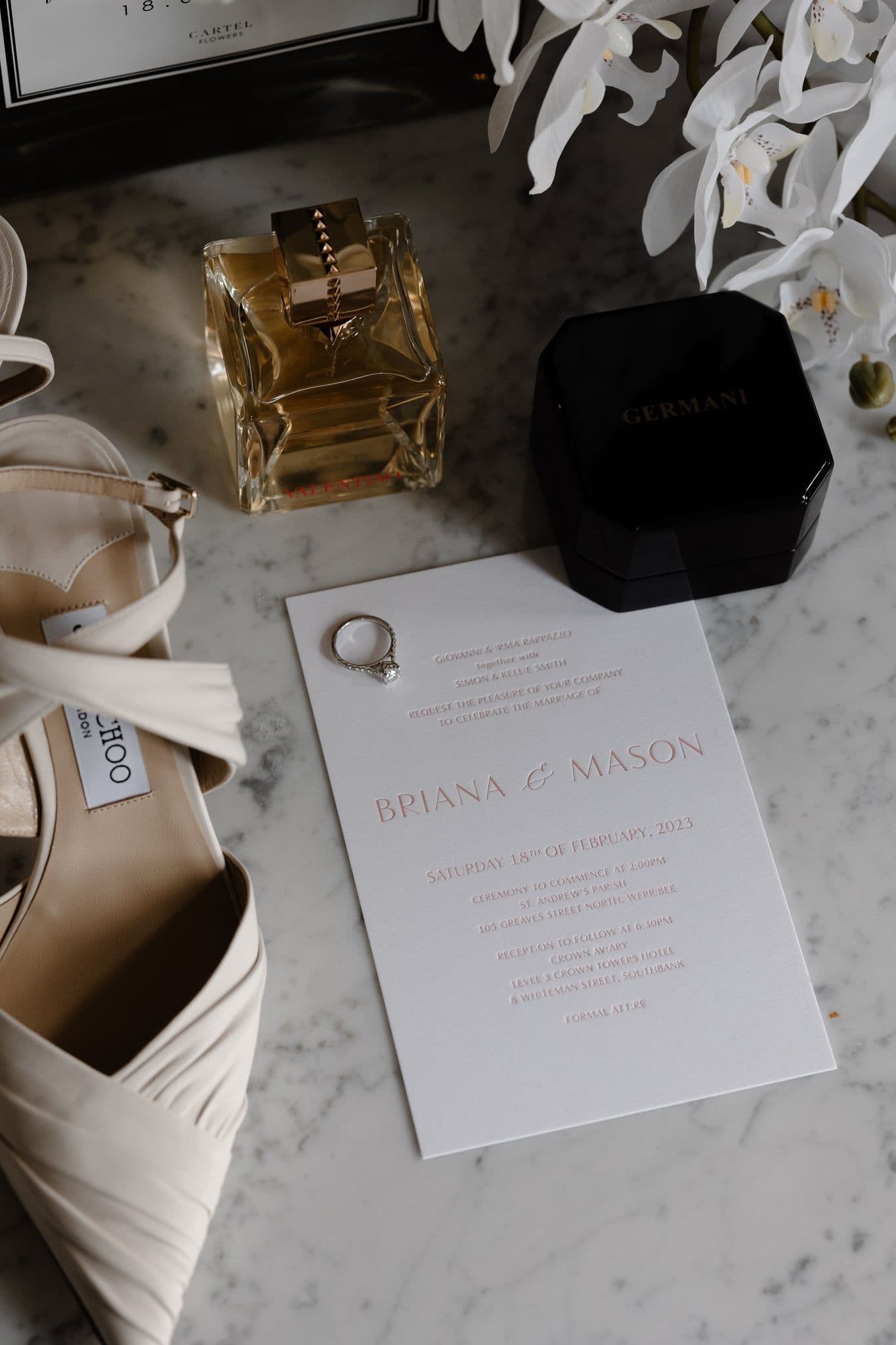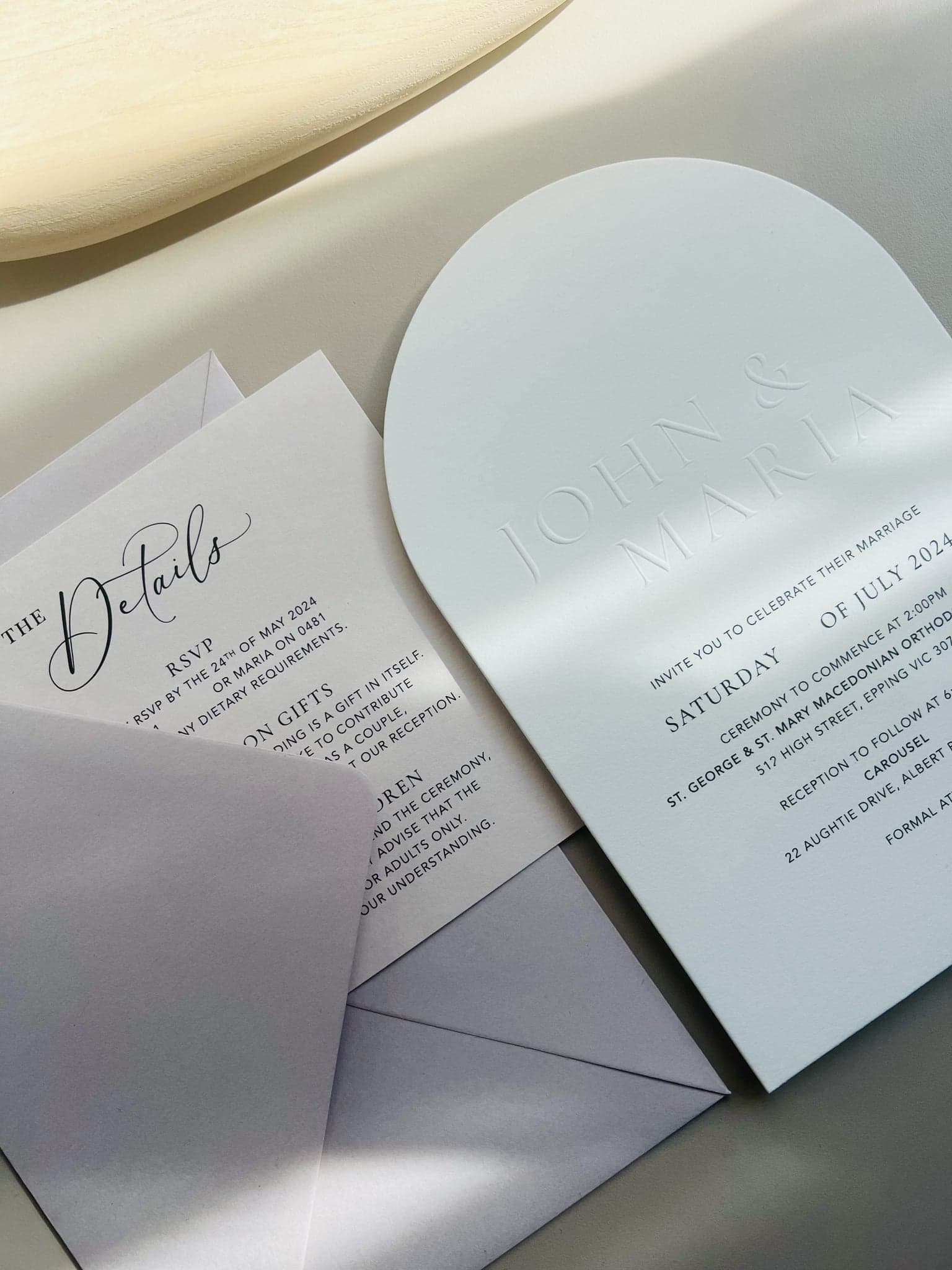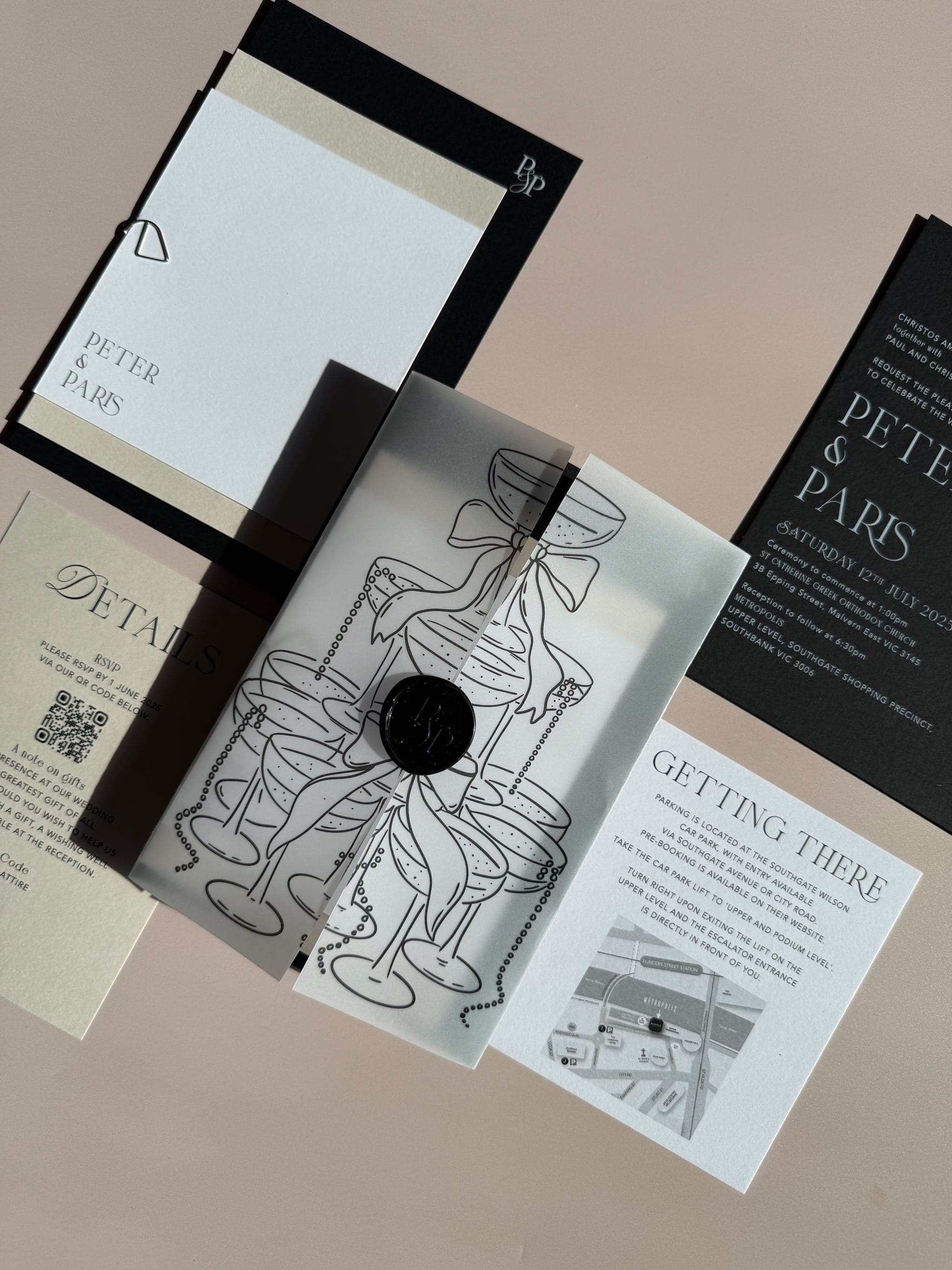
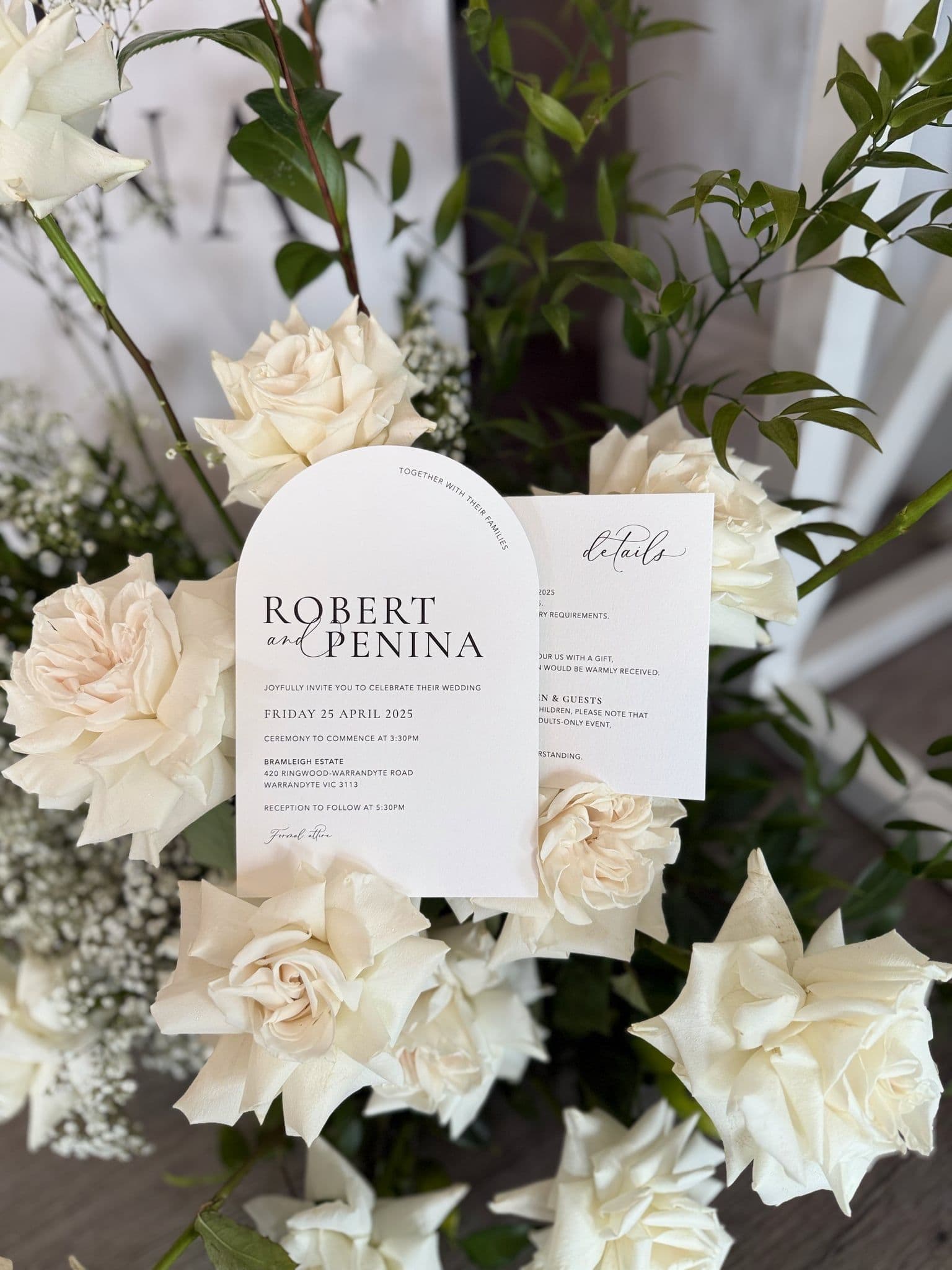
Picture this: you're holding two wedding invitations side by side. One has gorgeous, tactile letterpress printing where you can run your fingers over the debossed impression, feeling each letter pressed into thick cotton paper. The other features crisp digital printing with vibrant colours and perfect consistency. Both are undeniably beautiful, yet they offer completely different experiences. This is the choice facing many Australian couples as they plan their wedding stationery, and understanding the difference between letterpress and digital printing might be one of the most important decisions in your invitation journey.
The printing method you choose shapes everything—from how long production takes to what your final budget looks like, from the paper types you can use to the overall feel of your invitations. Let's explore both options so you can make a choice that feels right for your Australian wedding celebration.
The Artistry of Letterpress Printing
There's something deeply romantic about letterpress printing. Walk into a letterpress studio in Melbourne's Fitzroy or Sydney's Newtown, and you'll immediately understand. Vintage presses sit waiting, their cast-iron frames holding stories of thousands of invitations created before yours. The printer carefully arranges your design, inks the plate, positions the paper just so, then pulls the lever. The press makes a satisfying thunk as it presses inked type into paper, creating that signature debossed impression. It's craftsmanship in its truest form, virtually unchanged for centuries.
When your guests receive a letterpress invitation, they know immediately that something special has arrived. Their fingers instinctively trace over those pressed letters, feeling the depth of each impression. It's a sensory experience that digital printing simply cannot replicate. The slightly irregular ink distribution, the way light catches the pressed edges, the tactile quality—these elements combine to create invitations that feel genuinely handcrafted and luxurious.
Letterpress particularly shines for formal Australian weddings. If you're celebrating at heritage venues like Como House in Melbourne or one of Sydney's grand estates, letterpress invitations match that sophisticated aesthetic beautifully. The printing method itself carries historical weight and tradition, which resonates with couples who appreciate classical craftsmanship. For weddings where every detail matters and budget allows for premium choices, letterpress delivers an unmatched wow factor.
Of course, this level of artistry requires significant investment. Letterpress printing isn't quick or cheap. Each invitation passes through the press individually, making production time-intensive. Setup costs are considerable—creating the plates, calibrating pressure, mixing inks—all before a single invitation is printed. Most letterpress studios across Australia require six to eight weeks minimum for production, sometimes longer during peak wedding season from September through May. Financially, expect to invest twelve to twenty dollars or more per invitation suite, depending on complexity. For a wedding of one hundred and fifty guests, that's a substantial portion of your stationery budget.
The Precision of Digital Printing
Digital printing represents the modern approach to wedding invitations. Rather than physical plates and mechanical presses, digital printers work directly from computer files, using advanced technology to transfer ink onto paper with remarkable precision. Think of it as an incredibly sophisticated version of your home printer—except these commercial machines produce results that rival traditional printing methods in sharpness and quality.
What digital printing lacks in tactile impression, it makes up for in versatility and efficiency. Need full-colour graphics? No problem. Want to incorporate photography? Absolutely possible. Thinking about watercolour backgrounds or intricate illustrations? Digital printing handles all of it beautifully. The colour range is virtually unlimited, and consistency across every piece is perfect. When you're printing two hundred identical invitations, that consistency matters.
Digital printing particularly suits contemporary Australian weddings. Modern venues like Luminare in Melbourne or The Calyx in Sydney pair perfectly with crisp digital invitations. The clean precision matches architectural lines and contemporary aesthetics. If your wedding design incorporates bold colours, detailed graphics, or photographic elements, digital printing is likely your best choice—these design elements often don't translate well to letterpress anyway.
The practical advantages are significant. Production timelines typically run one to two weeks rather than six to eight. Costs range from three to eight dollars per invitation suite, sometimes less for larger quantities. Need to make changes after seeing your first proof? Easy adjustments with digital files rather than creating new plates. This flexibility extends throughout the entire process, from design refinement to final production.
Understanding the Quality Difference
Let's be honest about quality comparisons. Letterpress and digital printing offer different kinds of quality rather than one being objectively better. Letterpress excels at creating depth, texture, and that handcrafted feel. The debossed impression is its signature feature—something you can see and feel. It conveys craftsmanship and tradition in ways that resonate deeply with certain aesthetics and venues.
Digital printing excels at colour accuracy, detail reproduction, and consistency. When you want perfectly matched colours or need to print intricate illustrations, digital outperforms letterpress. Photographic reproductions look stunning with digital printing's colour capabilities. Fine typography prints with razor-sharp edges, and every invitation matches perfectly.
Neither printing method is universally superior. The best choice depends entirely on your priorities, wedding style, and practical constraints. A formal black-tie wedding at a historic property might call for letterpress's traditional appeal. A modern celebration with a custom illustrated invitation design needs digital's versatility. Understanding what each method does best helps you align your choice with your vision.
The Australian Landscape
Here's something worth considering: letterpress availability varies significantly across Australia. Melbourne boasts a thriving letterpress community, particularly in creative suburbs like Fitzroy and Richmond. Sydney has several excellent studios, mostly concentrated in inner-west areas. Brisbane's letterpress scene is growing but smaller. Regional Australia has limited letterpress access, often requiring shipping for consultations and delivery.
Digital printing, by contrast, is widely available throughout Australia. Every capital city has multiple high-quality digital printing services, and many regional centres offer excellent options too. This accessibility affects both turnaround times and costs. Competition keeps digital printing prices reasonable, while limited letterpress availability can drive up costs and extend timelines.
Peak wedding season—roughly September through April in most of Australia—affects both methods, but letterpress studios book out far earlier. If you're planning a spring or autumn wedding and want letterpress, start your invitation process at least nine to twelve months before your wedding date. Digital printing offers more flexibility, with rush orders often possible if your timeline gets squeezed.
Budget Considerations in Australia
Let's talk real numbers for Australian couples. Letterpress printing involves several cost components: plate creation (often one hundred fifty to four hundred dollars per colour), press setup (two hundred to five hundred dollars), and per-piece costs. Simple one-colour letterpress designs might run twelve to eighteen dollars per invitation. Complex multi-colour designs can exceed thirty dollars per piece. For a typical Australian wedding of one hundred and fifty guests, expect total letterpress costs between two thousand and four thousand dollars or more.
Digital printing structure differs. Setup costs are minimal—often just fifty to one hundred fifty dollars for file preparation. Per-piece costs vary by complexity but typically range from three to eight dollars for quality digital printing. That same one hundred fifty-guest wedding might cost six hundred to fifteen hundred dollars total. The savings are substantial, which matters when you're juggling multiple wedding expenses.
Many clever couples use a hybrid approach. Letterpress for the main invitation card where that wow factor matters most, with digital printing for RSVP cards, information inserts, and day-of stationery. This strategic allocation puts budget where it creates the most impact while maintaining cost control overall.
Timeline Reality Check
Production timelines deserve serious consideration. Letterpress requires extensive preparation. Your stationer needs time for design refinement, plate creation, paper selection, press setup, printing, and quality control. Six to eight weeks minimum is standard, with complex designs or multiple colours requiring even longer. During peak season, some studios book out three to four months in advance.
Digital printing moves much faster. Design approval to finished invitations typically takes one to three weeks. Many Australian digital printers offer rush services—sometimes completing orders in three to five business days for an additional fee. This speed provides flexibility if your planning timeline gets compressed or if you need last-minute additions.
Consider your own planning style too. Are you someone who loves having everything organised well in advance? Letterpress's longer timeline might not bother you. Do you tend to make decisions closer to deadlines? Digital's flexibility might save considerable stress. There's no wrong answer—just what works for your personality and circumstances.
Making Your Decision
Your wedding style should heavily influence your choice. Formal celebrations, classic aesthetics, traditional venues—these lean toward letterpress. Modern venues, contemporary design, colourful palettes—digital printing likely suits better. Think about the overall story your wedding tells and choose the printing method that reinforces that narrative.
Budget matters, obviously. If you have room in your stationery budget for premium options and letterpress appeals to you, the investment creates something genuinely special. If you're watching costs carefully or prefer allocating budget elsewhere, digital delivers beautiful results at friendlier prices. Neither choice means compromising on beauty—just different ways of achieving it.
Guest list size impacts the equation significantly. Fifty to seventy-five invitations? Letterpress costs, while higher per piece, remain manageable in total. Two hundred fifty invitations? Digital's efficiency becomes increasingly appealing as quantities grow. Do the math for your specific guest count before deciding.
The Hybrid Solution
Here's what more Australian couples are discovering: you don't have to choose exclusively one method. Hybrid suites combine the best of both worlds. Your main invitation might feature letterpress for that premium tactile experience, while RSVP cards, direction cards, and other inserts use matching digital printing. You get the wow factor where it matters most—that first impression—while maintaining budget control for secondary pieces.
Another smart hybrid approach uses digital printing for all invitation pieces but splurges on letterpress for day-of stationery like menus and place cards. These pieces guests interact with throughout your celebration, creating multiple moments where they experience that letterpress quality. The investment feels distributed rather than concentrated solely in the invitations.
Your Perfect Printing Method
At the end of the day, both letterpress and digital printing can create wedding invitations that thrill you and impress your guests. The right choice aligns your budget, timeline, aesthetic preferences, and practical needs into invitations that feel authentically you. Don't let anyone tell you one method is universally better—it simply isn't true.
Trust your instincts. Hold samples of both printing methods if possible. Close your eyes and feel the difference. Which one makes you smile? Which better matches the celebration you're planning? That visceral response often matters more than any logical comparison list.
Ready to explore letterpress and digital printing options for your Australian wedding? We'd love to show you samples of both methods, discuss which best suits your vision and budget, and create invitations that perfectly capture your celebration's spirit.